
WHAT DOES C1-C6 AND Q1-6 MEAN IN APPRAISAL REPORTS?
WE’RE BREAKING DOWN APPRAISAL CONDITION & QUALITY RATINGS SO YOU CAN DECIPHER YOUR REPORT EASILY.

In real estate Appraisal reports can contain confusing or anxiety-inducing sections – none more than the appraisal condition & quality ratings assigned to a property! The photo above gives us a pretty good idea about how a property can look in comparison to it’s assigned rating.
Homeowners often ask:
“Why did my home receive a C4 instead of a C3?”
“What does Q4 construction mean?”
“Does this hurt my home’s value?”
“How can I improve these ratings before I sell?”
The reality is this:
Condition and Quality ratings are standardized appraisal classifications used to help lenders, buyers, Realtors, and appraisers compare properties consistently across the market.
Yes… these ratings can absolutely influence your appraisal outcome.
As Certified Residential Real Estate Appraisers, we regularly analyze how condition and quality classifications affect buyer behavior, comparable sales selection, financing, and market value.
Let’s break down what these ratings actually mean & how YOU can use this knowledge strategically before selling your home.
Understanding the Two Core Rating Systems
In most residential appraisal reports (including Fannie Mae forms), appraisers evaluate:
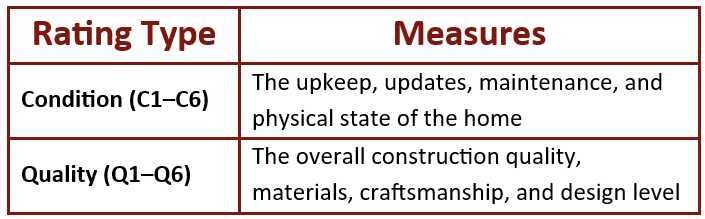
These ratings help appraisers compare homes consistently when selecting comparable sales.
Think of it this way:
Condition = How well the home has been maintained or updated
Quality = How the home was originally built
A home can have:
- Excellent condition but average construction quality
- High-end luxury quality but deferred maintenance
- Builder-grade quality with exceptional renovations
They measure different things.
What the C1 – C6 Condition Ratings Mean
C1 = Essentially Brand New
These homes:
- Have never been occupied OR
- Have been completely renovated to like-new condition
Characteristics:
- No physical depreciation
- New systems, finishes, and components
- Minimal or zero deferred maintenance
Typical examples:
- Newly constructed homes
- Full luxury gut renovations
📌 Appraiser’s Tip: C1 homes often command top-tier pricing and compete directly with new construction inventory.
C2 = Recently Renovated or Nearly New
These homes are:
- Very well maintained
- Recently updated
- Showing little to no wear
Examples:
- Updated kitchens and bathrooms
- New roof/HVAC/windows
- Modern finishes throughout
📌 Appraiser’s Tip: Many desirable move-in-ready homes fall into C2.
C3 = Well Maintained with Limited Depreciation
This is one of the most common ratings in stable neighborhoods.
Characteristics:
- Normal wear and tear
- Well cared for
- Some updates may exist
- No significant deferred maintenance
Examples:
- Functional but not fully modernized
- Older finishes still in good condition
📌 Appraiser’s Tip: C3 homes typically compete very well in most Florida resale markets.
C4 = Average Condition with Some Deferred Maintenance
This is where value separation often begins.
Characteristics:
- Functional but dated
- Minor deferred maintenance
- Older systems or finishes
- Some repair needs visible
Examples:
- Aging roof or HVAC
- Worn flooring
- Outdated kitchens/baths
- Exterior wear
📌 Appraiser’s Tip: Buyers increasingly compare monthly ownership costs and future renovation expenses. C4 homes may experience pricing pressure compared to updated competitors.
C5 = Significant Deferred Maintenance
These homes often require:
- Major repairs
- Rehabilitation
- System replacements
Examples:
- Roof leaks
- Damaged flooring
- Structural concerns
- Missing fixtures
- Unsafe conditions
📌 Appraiser’s Tip: Certain loan programs may reject C5 properties until repairs are completed.
C6 = Severe Damage or Uninhabitable
These homes are typically:
- Unsafe
- Incomplete
- Heavily damaged
- Not legally habitable
Examples:
- Fire damage
- Severe structural failure
- Major environmental damage
📌 Appraiser’s Tip: These properties are usually purchased by investors or cash buyers.
What the Q1 – Q6 Quality Ratings Mean
Unlike condition, quality reflects:
- Construction materials
- Architectural design
- Craftsmanship
- Customization level
- Engineering complexity
Q1 = Ultra Luxury / Exceptional Custom Construction
Rare, highly customized homes featuring:
- Architectural significance
- Premium materials
- Exceptional craftsmanship
Examples:
- Oceanfront estates
- Ultra-luxury custom homes
- Architect-designed residences
Q2 = Luxury Custom Construction
Characteristics:
- High-end materials
- Superior design
- Significant customization
Examples:
- Executive homes
- High-end waterfront homes
- Luxury gated communities
Q3 = Above Average / Semi-Custom
These homes often include:
- Better-than-builder-grade finishes
- Upgraded materials
- Enhanced design details
Common in:
- Move-up neighborhoods
- Higher-end suburban communities
Q4 = Standard Quality Construction
This is the most common rating nationally.
Characteristics:
- Functional design
- Standard builder materials
- Average craftsmanship
Examples:
- Production-built subdivisions
- Typical tract housing
📌 Appraiser’s Tip: Q4 does NOT mean “bad quality.” It simply reflects standard residential construction.
Q5 = Economy or Basic Construction
Characteristics:
- Simpler materials
- Lower-cost finishes
- Minimal architectural detail
Common in:
- Older entry-level housing
- Basic rental inventory
- Some manufactured housing
Q6 = Very Basic / Low Quality Construction
Typically:
- Minimal quality standards
- Limited durability
- Functional utility only
Rare in conventional lending markets.
Why These Ratings Matter for Appraisal Value
Condition and quality directly influence:
- Comparable sale selection
- Adjustment amounts
- Buyer demand
- Financing eligibility
- Days on market
- Negotiation leverage
Two homes with identical square footage can sell for dramatically different prices if:
- One is C2/Q3
- The other is C4/Q4
This mirrors what we often see in Florida markets where updated, move-in-ready homes outperform outdated homes due to buyer sensitivity toward renovation costs and insurance concerns.
How Do Buyers React to Condition & Quality?
Today’s buyers increasingly ask:
- “How much work will this home need?”
- “Will I need a new roof soon?”
- “Can I afford renovations after closing?”
- “Will insurance become difficult?”
In inflationary construction environments, updated homes often command stronger premiums because buyers want to avoid rising labor and material costs.
This means:
- Higher-condition homes often sell faster
- Updated homes may attract more financing options
- Deferred maintenance narrows the buyer pool
How Can Sellers Improve Their Appraisal Outcome Before Selling?
Focus on High-Impact Repairs
The biggest appraisal improvements often come from:
- Roof replacement
- HVAC replacement
- Kitchen updates
- Bathroom modernization
- Flooring replacement
- Exterior maintenance
📌 Appraiser’s Tip: You do NOT need ultra-luxury upgrades to improve condition classification.
Address Deferred Maintenance Before Listing
Small issues compound quickly during appraisals:
- Peeling paint
- Water stains
- Broken fixtures
- Damaged flooring
- Exterior deterioration
Even modest repairs can improve buyer perception and support stronger comparable positioning.
Document Your Improvements
Provide:
- Permits
- Contractor invoices
- Upgrade lists
- Warranty information
This helps appraisers verify improvements accurately.
Avoid Over-Improving Beyond Neighborhood Standards
A luxury remodel in a modest subdivision may not fully return its cost.
Strategic upgrades aligned with neighborhood expectations often perform best.
How Appraisers Apply These Ratings
At Redefine Value, we:
- Compare homes within similar condition ranges
- Analyze market-supported adjustment trends
- Study buyer behavior
- Evaluate renovation quality
- Verify updates and maintenance
- Compare competing inventory
We do not assign ratings arbitrarily.
These classifications reflect measurable market reactions observed through comparable sales and buyer activity.
Here’s an Example
A homeowner in Brevard County recently prepared to sell by:
- Replacing an aging roof
- Updating flooring
- Repainting interior/exterior
- Modernizing lighting and fixtures
The property improved from a likely C4 classification to C3. Result:
- Stronger buyer activity
- Reduced days-on-market
- Improved comparable positioning
- Successful appraisal at contract price
The upgrades were strategic, not excessive.
KEY TIPS
A homes’ appraisal condition and quality ratings can mean the difference between a home that’s valued at $400,000 and one that’s valued at $450,000+. These condition ratings measure upkeep and maintenance, while quality reflects original construction and materials. Understanding both helps homeowners identify what truly influences appraisal outcomes and buyer perception.
Small issues like aging roofs, worn flooring, or outdated systems can shift a property into a lower condition category. This may reduce buyer demand, narrow financing options, and increase negotiation pressure.
Market-supported updates such as kitchens, baths, roofing, HVAC systems, and flooring usually provide stronger appraisal support than over-customized luxury renovations.
Higher insurance costs, rising construction expenses, and financing pressures have made buyers increasingly focused on move-in-ready homes. Updated properties often sell faster and support stronger appraisals.
Providing documentation, addressing repairs early, and understanding how appraisers classify homes can reduce surprises and improve overall marketability.
WATCH US ON YOUTUBE