
How Sellers Can Avoid Overpricing When Buyers Are More Rate-Sensitive
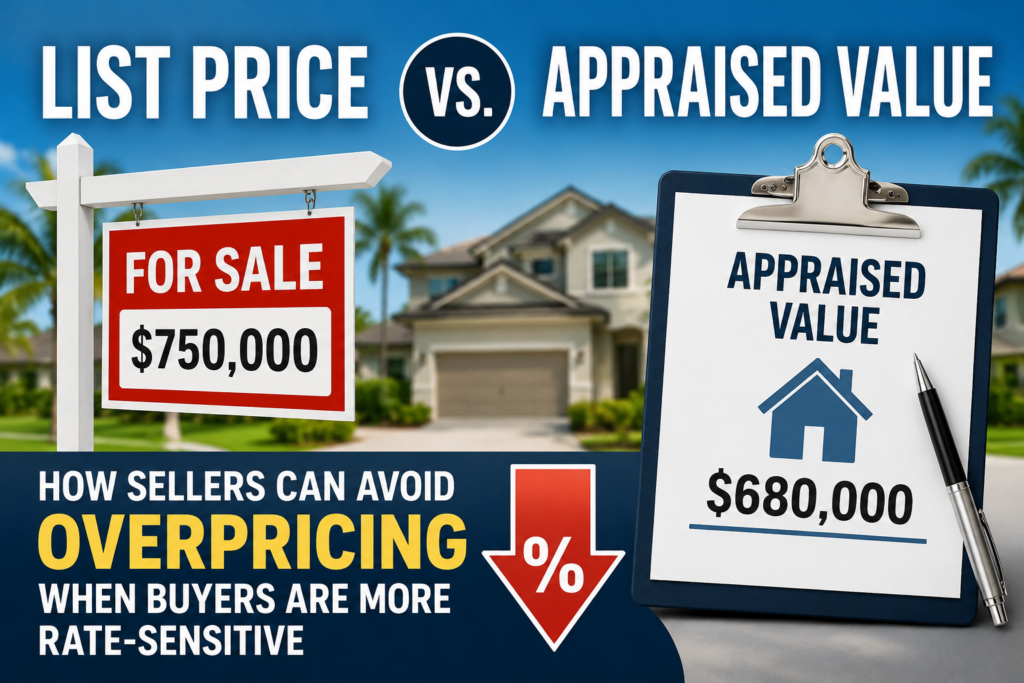
Florida’s housing market has entered a new phase regarding lists prices vs appraised values. While demand remains healthy in many areas, buyers have become far more selective as higher mortgage rates continue to impact affordability. One of the biggest misconceptions we encounter as residential real estate appraisers is that a home’s list price should naturally reflect its appraised value. In reality, these are two very different numbers, and understanding the distinction has never been more important.
Let’s define list price vs. appraised values. A list price is a seller’s asking price based on marketing strategy, competition, and expectations. An appraised value is an independent opinion of market value developed by analyzing recent comparable sales, current market conditions, and buyer behavior. In a slower, more rate-sensitive market, the gap between these two figures can widen if sellers rely on yesterday’s prices instead of today’s market evidence.
Understanding these value relationships helps reduce appraisal surprises, improve pricing decisions, shorten marketing time, and create smoother transactions. When affordability becomes the driving force behind purchasing decisions, realistic pricing supported by current market data becomes one of the strongest competitive advantages.
Why Mortgage Rates Are Changing the Pricing Conversation
Higher borrowing costs have shifted the way buyers evaluate homes. Instead of asking, “Can I afford this purchase price?” many are now asking, “Can I comfortably afford the monthly payment?”
1. Affordability Is Driving Buyer Behavior
As mortgage rates increase, monthly payments rise… even if home prices remain unchanged. Many buyers qualify for smaller loan amounts than they did just a few years ago, reducing the number of homes they can realistically purchase.
2. Buyers Have Become More Selective
Homes that are competitively priced, well-maintained, and move-in ready continue to attract attention. Properties priced above market expectations often experience longer marketing times, more price reductions, and increased negotiation pressure.
3. Market Conditions Are Adjusting
Florida continues to experience strong population growth, but many local markets are seeing increased inventory and more balanced negotiating conditions. Appraisers closely analyze these changing market trends because they directly influence comparable sales and ultimately affect market value.
List Price Is a Strategy. Appraised Value Is Market Evidence.
One of the most common misunderstandings during a real estate transaction is believing that the asking price establishes value. Here’s the reality:
1. Sellers Determine the List Price
The list price reflects:
- Current competition
- Marketing objectives
- Seller expectations
It can be above, below, or very close to market value depending on the pricing strategy.
2. Appraisers Measure Market Value
An appraisal is based on objective market evidence, including:
- Recent closed comparable sales
- Property condition and quality
- Location and neighborhood influences
- Current supply and demand trends
Unlike list prices, appraisals rely on verified sales rather than active listings or personal expectations. As we’ve discussed in previous newsletters, asking prices are marketing tools, not proof of market value.
3. The Market Decides Who Is Right
If multiple buyers quickly compete for a home, pricing may have been accurate (or even conservative.) If a property sits on the market with repeated price reductions, the market is providing valuable feedback that expectations may need adjustment.
Three Signs a Home May Be Overpriced
Pricing ahead of the market often creates unnecessary obstacles for sellers.
1. Extended Days on Market
Properties that remain unsold significantly longer than similar homes often become less attractive to buyers, even after price reductions.
2. Limited Showing Activity
When buyers consistently bypass a property despite strong marketing exposure, pricing is frequently the first factor they evaluate.
3. Appraisal Gaps During Contract
Even if a buyer agrees to pay an above-market list prices vs. appraised values, lender financing usually requires a credible appraisal in order to approve the mortgage (which might differ). If the appraised value is below the contract price, the transaction may require:
- Price renegotiation
- Additional buyer cash
- A Reconsideration of Value (ROV)
- In some cases, contract termination
Accurate pricing reduces the likelihood of appraisal-related delays and smoother closings.
How Sellers Can Price Strategically in Florida’s Current Market
Today’s market rewards preparation and realistic expectations rather than optimism alone.
1. Study Recent Comparable Sales
Focus on homes that have recently sold, not just those currently listed. Closed sales reflect what buyers were actually willing to pay under similar market conditions.
2. Understand Today’s Competition
Builder incentives, rising inventory, and changing mortgage affordability can influence buyer decisions. Pricing should reflect today’s marketplace rather than peak pricing from previous years.
3. Highlight Market-Supported Improvements
Recent renovations that buyers consistently value can strengthen marketability, including:
- Updated kitchens and bathrooms
- New roofing systems
- HVAC replacement
- Energy-efficient improvements
- Hurricane mitigation upgrades
Providing documentation for these improvements helps appraisers recognize verified contributory value when supported by comparable market data.
How Appraisers Analyze Value in a Slower Market
When developing a market value opinion, appraisers typically evaluate:
- Recent comparable sales
- Current inventory levels
- Days on market
- Seller concessions
- Market trend adjustments
- Buyer affordability and demand
- Neighborhood competition
If higher mortgage rates reduce buyer purchasing power, those changes gradually become reflected in comparable sales—not because rates directly determine value, but because buyer behavior changes the market itself. This relationship between affordability, comparable sales, and appraisal outcomes is becoming increasingly important throughout Florida.
Florida’s Market Outlook
Florida remains one of the nation’s fastest-growing states, supported by continued migration, employment growth, and long-term housing demand. However, today’s market is increasingly driven by affordability rather than urgency.
Properties that combine competitive pricing, strong condition, desirable locations, and realistic seller expectations continue to perform well. Sellers who rely on current market evidence instead of outdated pricing expectations position themselves for stronger results.
Ask Our Appraisers
What real estate policy change are you most concerned about right now? (Insurance, flood zones, mortgage rules, HOA/condo regulations, or new development?)
Your question may inspire a future newsletter topic.
Visit www.redefinevalue.com to learn more about our appraisal services, explore more from our blog right here: https://redefinevalue.com/blog-page/, and connect with us for real estate valuation insights across Florida’s Space Coast and beyond.
Follow us on YouTube, Facebook, and Instagram for more appraisal education, market insights, and property value tips.