
Are You Curious About the Latest Watchlists?
You Can Track Real Estate Policy Without Doom-Scrolling
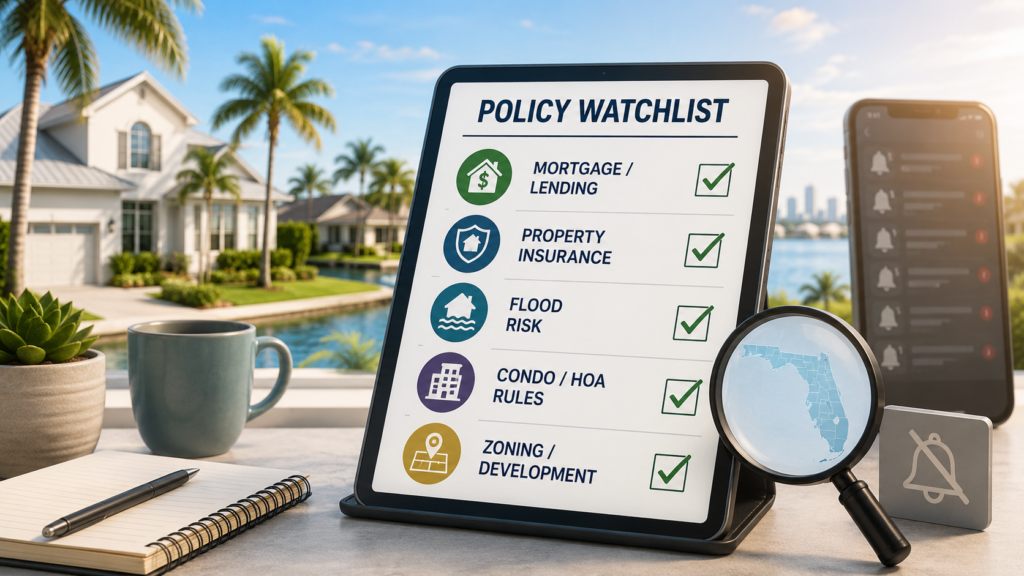
Real estate policy can change SO FAST! But YOU don’t need to live online to stay informed.
In general, a Real Estate watchlist is a short, intentional list of government sources, agencies, and policy categories we monitor because they may affect property values, lending, insurance, taxes, development, rental income, or resale timing. Executive orders and regulatory changes are typically government actions that can influence how homes are financed, insured, built, rented, repaired, appraised, or transferred.
For YOU, these changes matter because value is not created in isolation. Market value reflects what buyers are willing and able to pay under current conditions. When policy changes affect affordability, financing access, construction costs, insurance premiums, investor demand, zoning, or ownership expenses, the market eventually reacts through comparable sales, days on the market, concessions, rent levels, and buyer behavior.
For prospective and current property owners, this is significant because policy awareness can help prevent pricing mistakes, appraisal surprises, and missed timing opportunities. Here in Florida, where insurance, flood risk, condominium regulation, population growth, and housing supply pressures are major value drivers, staying informed can protect equity and improve decision-making. The goal is not fear-based scrolling; it is smart monitoring. Let’s dive into the good stuff…
What Should Be on a Real Estate Policy Watchlist?
A strong real estate watchlist focuses on policy areas that can actually move value.
Here are 5 Categories To Watch For:
- Mortgage and Lending policies
Changes from federal housing finance agencies can affect loan access, appraisal requirements, underwriting standards, and buyer purchasing power. - Insurance and risk regulation
In Florida, property insurance rules, Citizens Property Insurance updates, reinsurance trends, and wind mitigation requirements can directly affect monthly ownership costs. - Flood, FEMA, and disaster-related rules
FEMA flood map revisions, elevation standards, and disaster recovery programs can shift buyer demand and financing requirements. - Housing supply and construction rules
Building codes, permitting reforms, zoning changes, and development incentives can influence new construction supply and resale competition. - Tax, rental, and investor regulations
Property tax rules, short-term rental restrictions, homestead protections, and investor policies can change profitability and buyer demand.
Insight From Our Appraisal Team:
The most important policies are the ones that change what buyers can afford, what owners must pay, or what investors can earn.
How Executive Orders Can Influence Real Estate
Executive orders don’t automatically change your home’s value overnight, but they can direct federal agencies to review, revise, or prioritize housing-related rules. Here’s how:
- They can signal future lending changes
Orders tied to mortgage access may encourage agencies to evaluate underwriting, liquidity, or credit availability. - They can affect construction affordability
If federal policy targets permitting, development barriers, infrastructure, or building costs, it may influence long-term housing supply. - They can reshape agency priorities
HUD, FHFA, FEMA, EPA, Treasury, and banking regulators may adjust guidance based on federal policy direction. - They can create market expectations
Buyers, builders, lenders, and investors often react before final rules are fully implemented. - They can indirectly influence comparable sales
Once policy changes affect buyer behavior, those closed transactions become the data appraisers analyze.
Insight From Our Appraisal Team:
Because Florida has strong population growth, insurance pressure, coastal risk, and high housing demand, even modest federal housing policy shifts can have amplified local effects.
Regulatory Changes YOU Should Track as a Property Owner
Regulatory changes often matter more than headlines because they can directly affect real estate costs and transaction outcomes.
- Property insurance regulation
Rate approvals, insurer solvency, Citizens eligibility, and mitigation credits can change affordability and buyer qualification. - Condominium and HOA financial rules
Reserve requirements, milestone inspections, special assessments, and insurance costs can affect condo resale value and financing. - Flood zone and elevation requirements
A property moving into a higher-risk flood zone may face higher insurance costs, a smaller buyer pool, and more lender scrutiny. - Building code and wind mitigation standards
Stronger construction standards may increase costs but can also support value when they reduce risk and insurance exposure. - Local zoning and land-use approvals
New density, commercial development, road expansion, and infrastructure projects can raise or depress nearby property values.
Insight From Our Appraisal Team:
Regulation becomes measurable when buyers change what they are willing to pay.
How Policy Changes Impact Appraisals
Appraisers do not adjust value based on rumors, politics, or panic. We analyze measurable market reaction.
- Comparable sales trends
If buyers pay less after a rule change, that reaction shows up in closed sales. - Days on market
Higher ownership costs or uncertainty can slow resale activity. - Seller concessions
Buyers may request credits, repairs, rate buydowns, or price reductions when policy changes increase costs. - Rental income and occupancy
Investors may see income changes if rental rules, insurance costs, or demand patterns shift. - Buyer pool size
If financing, insurance, or ownership costs become harder to manage, fewer buyers may qualify or compete.
Insight From Our Appraisal Team:
Policy does not equal value change until the market proves it through behavior.
A No-Doom-Scrolling Policy Tracking System
The goal is to stay informed without becoming overwhelmed.
- Check official sources weekly, not hourly
Follow the Federal Register, HUD, FHFA, FEMA, Florida Office of Insurance Regulation, and your local city or county planning department. - Track only value-related keywords
Use terms like mortgage credit, appraisal, flood maps, property insurance, zoning, building code, condominium reserves, and housing supply. - Separate proposals from final rules
A proposed rule may never become final. Avoid making major real estate decisions until implementation details are clear. - Watch local market reaction
Policy matters most when it changes sales prices, rents, insurance quotes, buyer demand, or lending conditions in your area. - Keep a property file
Save insurance quotes, elevation certificates, permits, HOA budgets, reserve studies, renovation receipts, zoning notices, and appraisal-related documents.
Insight From Our Appraisal Team:
A well-organized property file helps make value visible when it matters most.
How Can YOU Use This Information Strategically?
Policy tracking becomes valuable when it leads to better decisions.
- As a Buyer, you can negotiate with better data
If insurance, flood risk, or regulatory costs are increasing, buyers can use verified cost information to support stronger negotiations. - As a Seller, you can price ahead of friction
If a policy change is reducing affordability, sellers should avoid overpricing and prepare documentation that supports value. - You can protect equity
Risk-reduction upgrades, permits, wind mitigation features, and maintenance records can improve marketability. - You can protect your Investment income
Monitoring rental regulations, insurance costs, and financing rules helps preserve cash flow and reduce surprise expenses. - Realtors can help reduce appraisal gaps
Agents who understand policy impacts can better explain pricing, buyer resistance, concessions, and comparable sales selection.
Here’s What to Watch in Florida Right Now
Florida property owners should pay close attention to the areas where regulation and cost pressure most directly intersect.
High-Impact Watch Areas:
- Homeowners insurance availability and rate movement
Insurance cost is now one of Florida’s biggest affordability factors. - Citizens Property Insurance updates
Changes to rates, eligibility, mitigation credits, or depopulation efforts can affect buyer confidence. - Flood maps and FEMA risk pricing
Flood insurance costs can reshape value, especially in coastal and low-elevation areas. - Condo reserve and inspection requirements
Older condominium buildings may face pricing pressure if assessments, reserves, or insurance costs rise. - Local development approvals
New roads, subdivisions, commercial centers, and zoning changes can change neighborhood appeal and future comparable sales.
Smart property owners do not chase every headline, they track the policies that move value, document what matters, and make decisions before the market forces them to react.
Ask Our Appraisers
What real estate policy change are you most concerned about right now? (Insurance, flood zones, mortgage rules, HOA/condo regulations, or new development?)
Your question may inspire a future newsletter topic.
Visit www.redefinevalue.com to learn more about our appraisal services, explore more from our blog right here: https://redefinevalue.com/blog-page/, and connect with us for real estate valuation insights across Florida’s Space Coast and beyond.
Follow us on YouTube, Facebook, and Instagram for more appraisal education, market insights, and property value tips.
Together, let’s redefine property valuation.